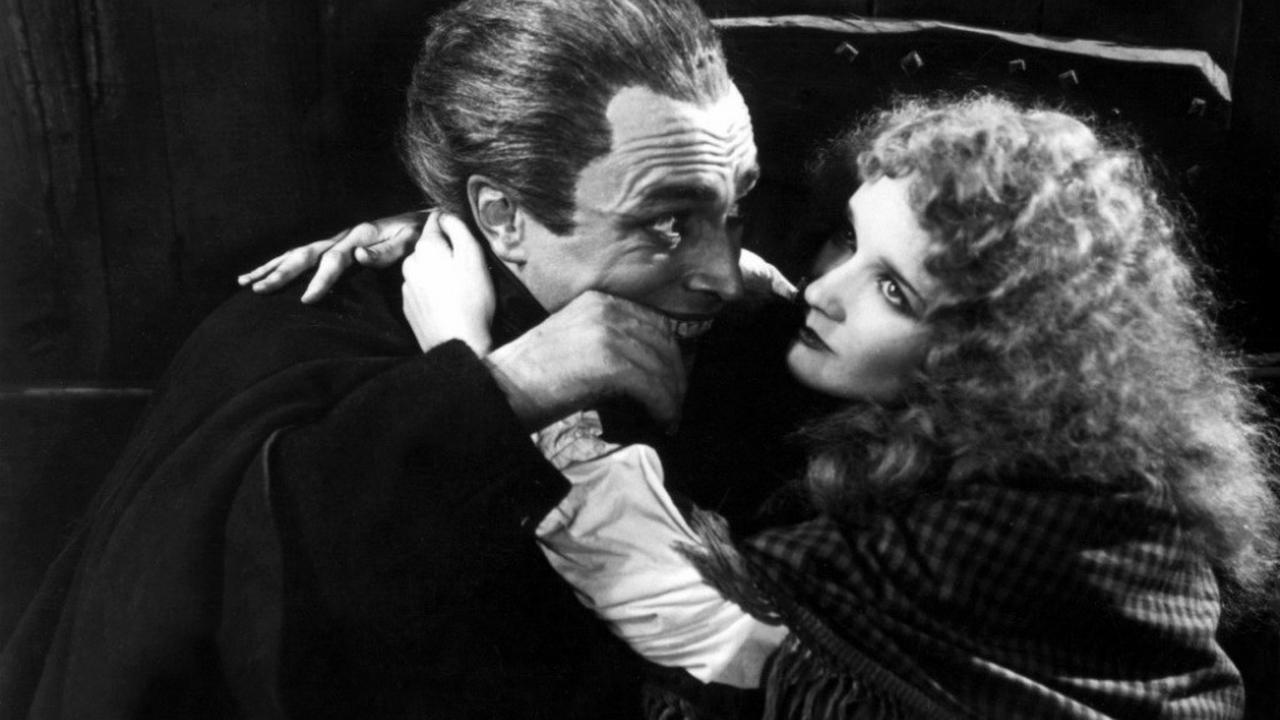
The Man Who Laughs1928
Aug 19, 2026 · imported from Letterboxd
A Love that Sees Us or a Love that feels us The man who laughs is a tale of old times but with a twist, instead of a Princess in distress it's a Prince that is a need for help, he's not trapped in a tower, he's not forced into eternal sleep, but he is cursed, although he's not in an active state of distress, his actual torture and need for help comes from the inside, his curse created this fraction between what he is on the inside and what the world sees, two battles he constantly fights one with the outside world that forever ridiculed him for his curse and another one within him, an imbalance between his soul and his body no matter what deranges him from the inside he can never exteriorize it, always smiling but never meaning; That is the fate of those who met Kaido..I mean gypsies, gypsies we're talking about gypsies here. Anyway the part that fascinated me the most was the love triangle, a love triangle between one that sees his soul and colors (because that's literally her only way of seeing him) while the other saw only his physical form, she saw the clown and the dancing monkey and she wanted him to dance for her; Thinking that he finally found someone that found beauty in his disfigured face he went towards her leaving the one that truly saw him crying behind…Maybe he's the blind one after all… So which one do you value? would you ditch your outer shell or wear it proudly for someone else's eyes? All of this work done with the character would have been nothing without a strong performance to match the depth of the of this creation by Conrad veidt’s vulnerable portrayal of "gwgeweg", and the world around the characters is so loud and colorful despite the film itself being silent and colorless, its tragic fairy-tale world with gothic elements that yells expressionism, it feel alive through its merchants and the lousy peasants and of course, the sophistications of the aristocrats, considering it's Victor Hugo story, it does tell a story of classes, after all gwynplaine is born into nobility only to be thrown into poverty as he grows infant. And as we get to see the nobles in the end and how soulless everything about them is, the complete contrast of a gwyplaine despite his horrid face he hides the full spectrum of human emotions. And this is exactly why people came to see him, for the spectacle he puts that's solely based on suffering. The story came out in 1869, 150 years after and we do the same thing, voluntarily; We turned our sorrows into performances and uploaded into spectacles in the theatre of social media, eventually, in a way, who are you ? are you defined by the people who see you ? or by the mask you shape around them, the performance you put on…